
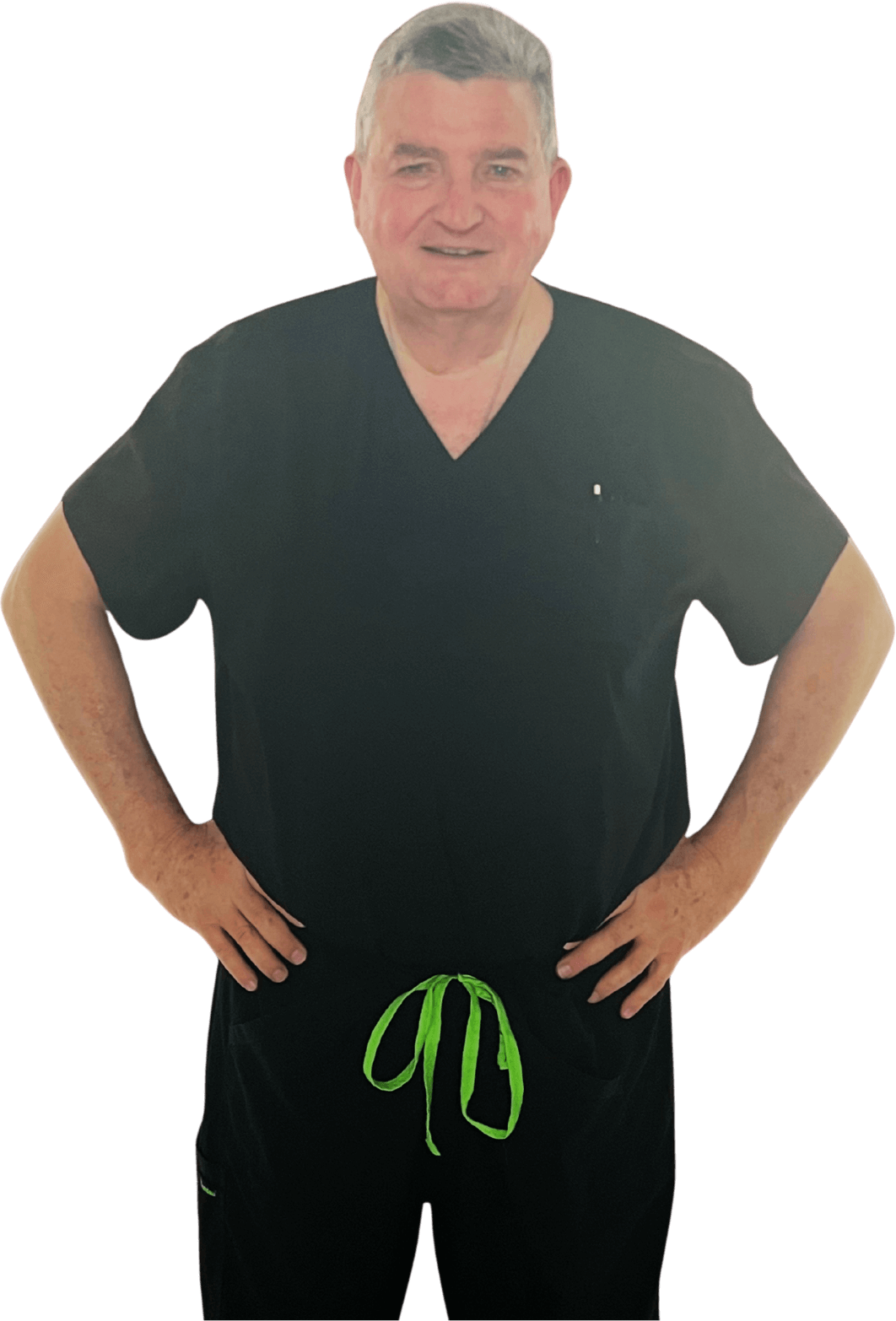
Surgical Expertise

Precision where it counts, and less of everything else

Thirty years of thoracic surgery, more than 3,000 minimally invasive procedures, and an approach built on robotic and thoracoscopic technique wherever the anatomy allows.

The approach

Expert surgical care with compassion and precision

Training from Yale, Johns Hopkins, and Brigham and Women's Hospital sits behind every operative plan. The technique is chosen for your anatomy and your disease, not for convenience.

Less pain

Small incisions spare muscle and nerve, and nerve blocks are placed during surgery.

Smaller incisions

Robotic and thoracoscopic ports replace a full thoracotomy in most cases.

Faster recovery

Hospital stays are typically two to four days, with light activity in one to two weeks.

Fewer complications

Reduced tissue trauma lowers the risk of infection and pulmonary complications.

Dr. John R. Roberts in his white coat

Dr. John R. Roberts

Cardiothoracic and Surgical Oncology

Core areas

Four areas where volume changes the outcome

Each of these is performed regularly, which matters more in thoracic surgery than in almost any other specialty.

01

Lung Cancer Surgery

Anatomic resection tailored to the tumor rather than the tradition: lobectomy, segmentectomy, and sleeve resection performed thoracoscopically or robotically whenever the anatomy allows.

  • Robotic lobectomy
  • Segmentectomy
  • Sleeve resection
  • Wedge resection
02

Esophageal Surgery

Treatment of esophageal cancer and benign disorders, including minimally invasive esophagectomy, with attention to swallowing, nutrition, and quality of life after surgery.

  • Minimally invasive esophagectomy
  • Hiatal hernia repair
  • Benign stricture
  • Reflux surgery
03

Mediastinal Tumors

Removal of thymomas, cysts, and other masses in the central chest through robotic access, which improves visibility around delicate vessels and nerves.

  • Thymectomy
  • Cyst resection
  • Diagnostic biopsy
  • Myasthenia gravis
04

Thoracic Outlet Syndrome

Pain, numbness, and swelling in the arm caused by compression at the first rib. Few surgeons perform first rib resection. Dr. Roberts has completed more than 250, including one of the first robotic rib resections in Florida.

  • First rib resection
  • Robotic approach
  • Vein decompression
  • Athlete evaluation

Services

What the practice treats

Hover any card for the detail behind it.

01

Thoracic Surgery

Surgical care for the lungs, esophagus, mediastinum, and chest wall using advanced techniques.

Elective and urgent operations inside the chest, planned alongside your pulmonologist, oncologist, and radiologist so every decision fits the whole picture.

  • Lung resection
  • Airway surgery
  • Pleural procedures
  • Chest wall repair
Read the detail
02

Minimally Invasive Surgery

Thoracoscopic (VATS) and robotic procedures that reduce pain, risk, and time in the hospital.

Small incisions, a high-definition camera, and robotic instruments give precise access with far less trauma to healthy tissue. Most patients are up and walking the same day.

  • Robotic lobectomy
  • VATS resection
  • Same-day mobility
  • Shorter hospital stay
Read the detail
03

Lung Cancer

Diagnosis, staging, and surgery for lung cancer with an emphasis on early detection and precision.

From the first suspicious scan through staging and resection, care runs on one continuous plan with one surgeon who knows your case start to finish.

  • Lobectomy
  • Segmentectomy
  • Sleeve resection
  • Nodule evaluation
Read the detail
04

Surgical Oncology

Cancer surgery of the chest, including complex and high-risk cases other centers decline.

Fellowship training in surgical oncology at Johns Hopkins informs how tumors of the mediastinum, chest wall, and esophagus are approached and reconstructed.

  • Thymectomy
  • Esophagectomy
  • Mediastinal tumors
  • Metastasectomy
Read the detail

Surgical FAQs

Straight answers about the operation

Recovery, pain, safety, and referrals. If something is missing, the office will answer it by phone.

Thoracoscopic surgery, also called VATS, is a minimally invasive technique that uses small incisions and a camera to reach the chest cavity. It avoids a large incision, reduces pain after surgery, and shortens recovery.

Bring your scan. Leave with a plan.

Consultations cover your imaging, the surgical options, the risks specific to you, and what the first two weeks after surgery look like.